Rita
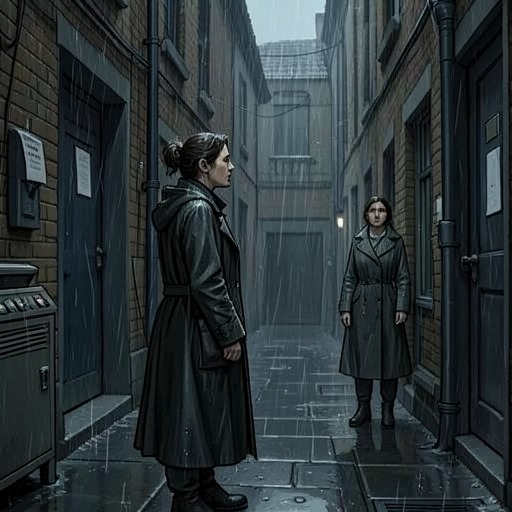
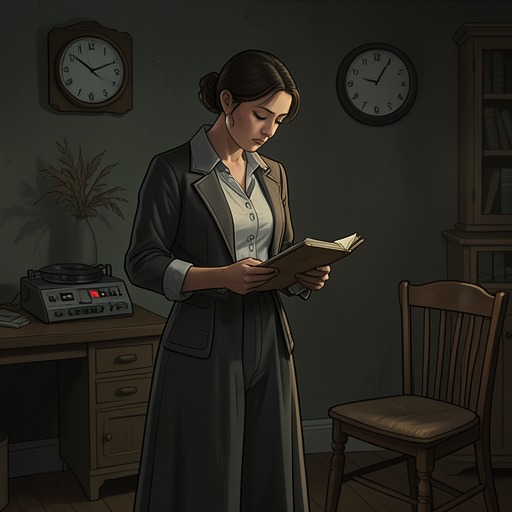
Elena KnowsRita is Elena’s daughter, a school employee, and the central caregiver in Elena’s progressive illness. Her life is marked by acts of determined care, but that care is not always gentle or freely accepted: years before her death, she intervenes in Isabel’s pregnancy against Isabel’s wishes, while later she confronts the prospect that caring for Elena may exceed what she can bear. The circumstances of Rita’s death make that strain inseparable from a mystery. She is found hanging in a church belfry on a rainy afternoon, although rain and the church were precisely what she had spent much of her life avoiding.
Identity and Background
At seventeen, only weeks after her father’s death, Rita began working at a Catholic school. Father Juan appealed to the school board to give the position to the dead man’s daughter despite her age. Her employment became part of a demanding daily routine: she walked home to have lunch with Elena, then hurried back to ring the bell announcing the start of afternoon classes. The bell, ordinary in her working life, would later be connected to the discovery of her body in the church belfry.
Rita’s habits also included an elaborate set of precautions against misfortune. She avoided the church whenever rain threatened because she feared lightning would strike its cross, a fear rooted in a passing remark her father had made when she was a child. She kept away from a nearby house with a swimming pool during storms, and she devised excuses—even once pretending to faint—to avoid being sent to the chapel in bad weather. Other rituals accompanied encounters she considered unlucky: she recited a rhyme and patted her right buttock when passing a red-haired person, and touched her right hand to her left breast when someone mentioned a locally reputedly cursed old man. These practices were not incidental quirks in the account of her death. They form the pattern against which Elena judges the claim that Rita willingly went to the church on a rainy day.
Life with Elena
Rita and Elena shared a practical, recurring domestic life. Every two years they travelled to Mar del Plata; in the years between, they stayed home and used their savings for repairs, from a broken pipe and a worn mattress to a newly dug sewage pit and patio tiles displaced by a tree’s roots. Their seaside holidays followed familiar arrangements. They rented modest two-room lodgings, with Rita in the bedroom and Elena in the living-dining area, and chose places partly for the convenience of collecting the key and paying the owner. They did not go to the beach: the crowds, heat, umbrella, and lack of guaranteed shade made it unattractive to them. Instead, they slept later, ate croissants and fresh fish, and walked along the waterfront in the evenings.
Those repeated journeys depended on Elena’s ability to move and clean. She used to scrub the holiday apartment, finding the work relaxing and easing her back pain; later, her illness made such effort increasingly difficult. A glass sea lion Rita had bought in Mar del Plata stood on a shelf in her room. It changed to a purplish-pink colour when rain was imminent, and that was its colour on the afternoon Rita died. The object makes the weather more than background: it registers the same rain that Elena remembers as incompatible with Rita’s habits.
Intervention in Isabel’s Life
Twenty years before the present events, Rita brought Isabel into the family home after finding her vomiting outside the midwife’s premises. Isabel had a paper bearing an address and was pregnant; she said she did not want to become a mother and repeatedly rejected Rita’s claim that the pregnancy made her a mother already. Rita answered through religious and moral arguments, invoking the child’s existence and the guilt she believed an abortion would bring. Isabel challenged her authority and insisted that Rita could not decide for her.
Rita nevertheless acted on her own conviction. She took Isabel away from the midwife’s address and brought her home, then arranged a taxi to the address on Isabel’s electric bill. Elena helped Rita get Isabel into the car, and all three travelled together. Isabel continued to deny that she regarded the pregnancy as a child; Rita and Elena did not accept that account. The episode establishes a consequential contradiction in Rita’s conduct: she could recognize another person’s distress and respond with energy, yet translate that response into an insistence that overrode the other person’s stated choice. Rita, who was not a mother and would never be one, compelled another woman toward motherhood by applying the doctrine she had learned to that woman’s body.
Caregiving and Conflict
Two weeks before Rita’s death, she and Elena visited Dr Benegas at the hospital, where Elena underwent a battery of tests. The diagnosis was Parkinson-Plus syndrome, a form the doctor described as involving more than ordinary Parkinson’s. Rita pressed him to explain what that meant in practice. She named the accumulating losses in Elena’s mobility, speech, and ability to manage daily tasks, and challenged the suggestion that the illness demanded still more from her. The doctor predicted faster progression, possible dependence for getting out of bed, eating, and using the bathroom, difficulty communicating and reading, and the possibility of dementia. He advised Rita to consider hiring help while she was at work.
Rita’s questions exposed the conflict between Elena’s need for care and the burden placed on the person expected to provide it. She asked whether the doctor was saying Elena would die soon and demanded to know what other solution there could be. When the doctor told her she would have to give back the care her parents had once given her, Rita rejected the comparison between Elena’s future condition and infancy: in her view, the changes would reverse a child’s development rather than repeat it. She cried, admitted she did not think she could become the mother the doctor expected her to be, and did not take the pamphlets he offered. Elena accepted them instead. The two walked home without speaking; Rita went ahead, and at home she shut herself in her room while Elena began making dinner and reading the material alone.
Rita had also seen Dr Benegas privately two days before she was found. Elena did not know about that visit. After Rita’s death, the doctor told the police about it, but the available account does not disclose what they discussed. Elena wants to know, recognizing that she had not thought to ask while Rita was alive. This withheld conversation leaves an important gap beside the known confrontation: the pressure Rita voiced about caregiving is clear, but her final private exchange with the doctor is not.
Death and Narrative Significance
Rita was found in the church belfry on a rainy afternoon. Boys assigned by Father Juan to ring the bells for the seven o’clock Mass discovered her and summoned him. Her body hung from an old rope attached to the yoke holding the bronze bell; the rope’s condition made it difficult to explain how it had held her weight. The report also noted scaffolding boards left from earlier work on the dome. Father Juan recognized Rita but did not say her name. He confirmed that she was dead, called the police, and asked that the service proceed because worshippers were already arriving for Corpus Christi.
People around Elena call the death suicide, but Elena cannot reconcile that conclusion with Rita’s long-standing avoidance of the church in stormy weather. Rita had feared lightning since childhood and had evaded chapel duties whenever rain threatened. Elena argues that this established pattern could not simply have vanished on the day Rita died. The inspector assigned to the case suggests that someone or something might have brought Rita there, without offering an explanation; Elena rebukes him for speculating without knowledge. The narrative therefore distinguishes the fact of Rita’s death from the unresolved question of how she came to the belfry. Her lifelong rituals, the weather-predicting glass sea lion, and the concealed appointment with Dr Benegas sharpen that uncertainty without settling it. Rita remains at once a daughter whose routines Elena remembers in minute detail and a person whose final circumstances resist the certainty others impose on them.